


Sorry, no sales person is available right now to take your call. Pls leave a message and we will reply to you via email as soon as possible.
Home/ Industry News/ Resistors — hailed as the "rice of the electronics industry," firmly maintaining their position as an essential and mainstream component across the entire industry.
Resistors — hailed as the "rice of the electronics industry," firmly maintaining their position as an essential and mainstream component across the entire industry.
2026-05-12
In the ICDeal 2026 latest hotlist of electronic components, resistors have consistently topped the search rankings for basic components, making them the most widely quoted, BOM-matched, and bulk-purchased passive components across the entire industry. Against the backdrop of explosive AI computing demand, rapid growth in new energy vehicles, upgrades in industrial automation, and widespread adoption of smart home devices, seemingly unassuming surface-mount resistors, precision resistors, and high-power resistors have become indispensable foundational building blocks for all electronic products, industrial control equipment, and new energy terminals.
In 2026, the global passive components industry has entered a new cycle of price hikes and supply shortages. Major manufacturers such as Yageo, Fenghua Advanced Technology, and Murata have successively issued price adjustment notices, with mainstream SMD resistors and precision resistors seeing price increases of 15%–20%. Automotive-grade and high-precision models face extended lead times and severe spot shortages, becoming a focal topic of discussion across the electronics industry this year. From consumer electronics giants like Midea, Xiaomi, and Gree, to industrial automation leaders such as Siemens, Schneider Electric, and ABB, and further to new energy and AI computing enterprises including BYD, Huawei, and Inspur, resistors have long been essential BOM items—high-volume, multi-specification, and irreplaceable.
I. Product Overview: The Core Foundational Component for Current Limiting and Voltage Division
Resistors are the most fundamental, highest-volume, and most widely used passive discrete components in electronic circuits. Their core physical property is to impede current flow, primarily serving critical functions such as current limiting, voltage division, voltage sampling, load matching, and circuit protection. No matter how powerful the MCU controller, operational amplifier IC, or power module may be, they all require resistors to ensure stable circuit operation, precise signal matching, and safe current control.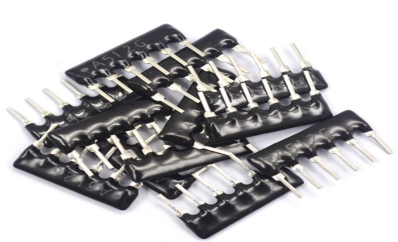
Classified by package and manufacturing process, mainstream resistor types include: thick-film SMD resistors, through-hole carbon film resistors, metal film precision resistors, wirewound high-power resistors, alloy current-sense resistors, and automotive-grade high-temperature resistors. Package sizes cover the full range of standard SMD footprints including 0402, 0603, 0805, and 1206. Resistance values span from milliohms to megaohms, with tolerances available at 5%, 1%, and high-precision grades down to 0.1%. Temperature coefficients (TCR) range from standard commercial grade to industrial wide-temperature and automotive-grade anti-vibration, high-temperature variants, enabling comprehensive compatibility across consumer electronics, industrial control, automotive electronics, medical devices, AI servers, and photovoltaic energy storage applications.
On the ICDeal component procurement big data platform, resistors consistently rank among the top in daily search volume, BOM matching frequency, small-batch prototyping orders, and large-scale production orders. Platform customers span major home appliance manufacturers, industrial R&D enterprises, new energy producers, telecom equipment companies, university laboratories, and maker development teams—solidifying resistors as the evergreen, high-volume foundational component of the electronics industry.
(1) Key Parameter Breakdown: Comprehensive Specifications to Meet Cross-Industry Selection Needs
Resistance Range: From ultra-low milliohm current-sense resistors to high-megaohm high-voltage resistors, covering all requirements for signal circuits, power circuits, and high-voltage control systems;
Tolerance Grades: 5% for general consumer use, 1% for industrial applications, and 0.1% for high-precision instrumentation—satisfying both basic current limiting and high-accuracy signal sampling;
Power Ratings: Standard SMD resistors at 1/16W, 1/10W, and 1/8W; high-power wirewound resistors at 1W, 2W, and 5W—suitable for both low-signal and high-power load scenarios;
Temperature Coefficient (TCR): Standard resistors at ±100ppm/℃, precision resistors within ±25ppm/℃; industrial and automotive-grade variants operate stably across -40℃ to 125℃;
Packaging & Process: Miniaturization and SMD dominance are now mainstream. Ultra-miniature 01005 resistors support smart wearables and high-density PCB layouts, aligning with the trend toward thinner, lighter electronics.
This complete parameter system comprehensively covers four tiers: consumer, industrial, automotive, and high-precision. Engineers can select components based on application needs without requiring complex circuit modifications, ensuring exceptional adaptability.
(2) Technical Highlights: Simple in Structure, Irreplaceable in Industry
Circuit Stability Requires Resistors – Every PCB relies on resistors for current limiting and voltage division to prevent excessive current from damaging MCUs, capacitors, diodes, and other components—making them the first line of defense for safe circuit operation.
Precision Sampling Powers Industrial & High-End Equipment – Metal film precision resistors and alloy current-sense resistors offer low TCR and high accuracy, widely used in industrial PLC signal acquisition, instrumentation measurement, and battery management system (BMS) current sensing in new energy applications—ensuring reliable and precise data.
Automotive-Grade Reliability Meets New Energy Vehicle Demand – Automotive resistors feature high-temperature resistance, vibration resistance, humidity resistance, and EMI immunity, ideal for vehicle electronic controls, lighting systems, and battery management systems. As new energy vehicle penetration rises, automotive resistor usage continues to surge year after year.
Mature Domestic Technology Enables Significant Import Substitution – Leading Chinese manufacturers like Fenghua Advanced Technology and Sanhuan Group have fully upgraded their processes. Standard SMD resistors now achieve 100% substitution of Japanese, Korean, and Taiwanese brands, while high-precision and automotive-grade models are making continuous breakthroughs—positioning resistors as a core segment in the 2026 passive components import substitution wave.
II. Application Scenarios: Mass Deployment Across Full Industrial Chains of Top Brands
Resistors are universal standard components with no industry limitations. Virtually all leading brands incorporate them in large volumes across their entire product lines, spanning six key sectors: consumer appliances, smart home devices, industrial automation, new energy vehicles, AI servers, and medical equipment.
(1) Consumer Electronics & Smart Home Sector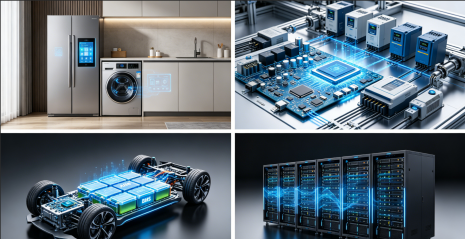
Home appliance giants like Midea, Gree, Joyoung, and Supor extensively use SMD resistors on main control boards of air conditioners, refrigerators, rice cookers, and air fryers—for current limiting, button voltage division, and LED control—ensuring stable operation at minimal cost. Xiaomi, Huawei, and Philips deploy large quantities of miniature 0402 and 0603 SMD resistors in smart plugs, smart lights, wearables, and Bluetooth earphone charging cases—supporting compact, lightweight designs while enabling low-power circuit matching to enhance battery life and reliability.
(2) Industrial Automation & Power Control Sector
Industrial leaders such as Siemens, Schneider Electric, ABB, Omron, and Mitsubishi impose stringent requirements on resistor accuracy and stability in PLC controllers, inverters, industrial switches, sensor modules, and distribution cabinets. High-precision metal film resistors handle analog signal sampling, high-power wirewound resistors manage load current limiting and discharge, and wide-temperature industrial resistors operate reliably in factory environments with high heat and electromagnetic interference—ensuring industrial equipment runs fault-free year-round.
(3) New Energy Vehicles, Energy Storage & Photovoltaics
New energy automakers like BYD, Tesla, and NIO mass-adopt alloy current-sense resistors and automotive-grade high-temperature resistors in onboard BMS battery management systems, motor controllers, and EV chargers—for precise current sensing and overcurrent protection—aligning with the 800V high-voltage platform trend. Photovoltaic inverters and energy storage converters heavily utilize high-voltage, high-power resistors for voltage stabilization, load matching, and surge suppression—ensuring safe and stable grid integration for renewable energy generation and storage systems.
(4) AI Servers & Communication Computing Sector
With the 2026 boom in AI computing clusters, passive component usage per server from Inspur, Huawei, and Dell has multiplied compared to traditional servers. High-precision SMD resistors and high-voltage resistors are seeing surging demand to provide accurate voltage division and current control for CPUs, memory, and power modules—ensuring stable, high-load operation of computing infrastructure over extended periods.
(5) Medical Electronics & Academic R&D Sector
Medical devices from Mindray and Philips rely on precision resistors for physiological signal sampling, demanding extreme accuracy. In university embedded education and maker R&D projects, resistors are essential beginner components—indispensable throughout prototyping, redesign, and mass production phases.
III. 2026 Market Hotspots: Price Hikes, Shortages, and Domestic Substitution as the Three Core Themes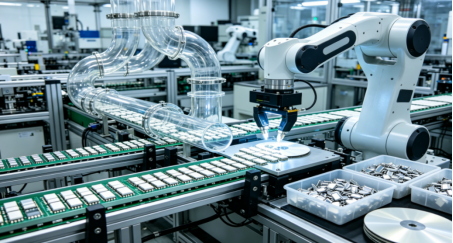
The resistor market in 2026 shows a pattern of stable pricing for standard parts, tight supply for high-end models, and upward price pressure across all categories.
First, rising raw material costs—especially precious metals like silver, ruthenium, and palladium—have driven up resistor paste and substrate expenses. Major manufacturers including Yageo and Fenghua Advanced Technology have issued consecutive price increase notices, with mainstream specifications rising 15%–20%, passing cost pressures downstream.
Second, capacity constraints affect automotive-grade, high-precision, and high-voltage/high-power resistors. Japanese and Korean manufacturers prioritize automotive and AI sectors for their premium产能, extending lead times for general industrial and consumer models and making spot inventory scarce—increasing procurement difficulty for SMEs.
Third, domestic substitution is accelerating. Mid-to-low-end SMD resistors and general-purpose power resistors have achieved full import replacement. Fenghua Advanced Technology and Sanhuan Group are expanding capacity, while high-precision and automotive-grade resistors are rapidly advancing—gradually entering supply chains of Huawei, NVIDIA, BYD, and other industry leaders.
Fourth, the market sees increased circulation of non-original, refurbished, and substandard resistors. These low-cost, poor-quality parts often exhibit excessive TCR and falsely labeled tolerances, causing device crashes, board burnouts, and shortened lifespans—posing serious quality risks in mass production. Procurement through authorized, reputable channels is thus more critical than ever.
IV. ICDeal Supply Chain Empowerment: Full-Specification Spot Inventory, Genuine Parts, One-Stop Procurement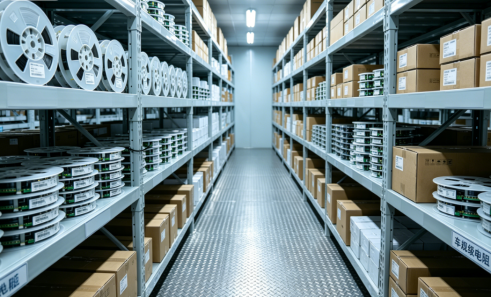
First, direct sourcing from authorized manufacturers with rigorous inbound quality inspection. Leveraging a blockchain-based traceability system, we eliminate counterfeit, recycled, and non-standard resistors. Every batch meets specification and performance standards, ensuring consistent mass production quality.
Second, nationwide multi-warehouse network with massive spot inventory. We support both small-batch prototyping and large-volume orders, offering 24-hour order response and same-day dispatch for urgent needs—never delaying production schedules or R&D timelines.
Third, comprehensive value-added services: real-time resistor price trend analysis, precise domestic alternative recommendations, one-click BOM intelligent matching, and free access to technical datasheets and selection guides—helping enterprises reduce procurement costs, mitigate shortage and price hike risks, and accelerate R&D cycles.
V. Industry Outlook: Resistors Remain Perennially Essential; High-End and Domestic Sourcing Are the Future Trends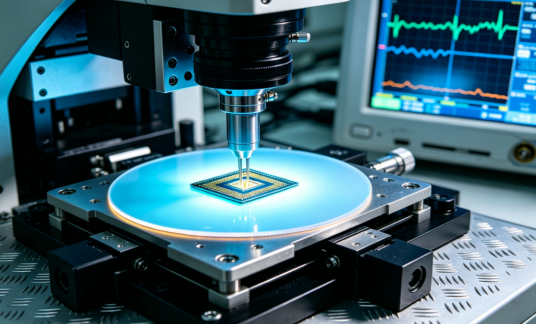
As AI computing, new energy vehicles, energy storage, photovoltaics, and industrial IoT continue to expand, demand for resistors will grow steadily. Miniaturization, high precision, wide-temperature resilience, and automotive-grade reliability will define mainstream technological directions.
The historical dominance of Japanese and Korean brands in the high-end market is gradually eroding. Domestic leaders like Fenghua Advanced Technology and Sanhuan Group are intensifying R&D and capacity expansion. High-precision and automotive-grade resistors will accelerate import substitution, steadily increasing the market share of Chinese-made resistors.
For procurement and R&D teams, securing genuine spot inventory through authorized channels and implementing multi-source domestic substitution strategies will be key to mitigating price and supply risks and strengthening supply chain resilience. ICDeal will continue expanding its full-category resistor inventory and enhancing high-end and domestic alternative solutions—to deliver stable, worry-free, and cost-effective component procurement services to the industry.
Though tiny in size and low in unit cost, resistors are truly the “industrial rice” of the electronics industry—pervading consumer, industrial, new energy, and AI computing supply chains, perpetually essential and irreplaceable. Amid the 2026 landscape of component price hikes, shortages, and supply chain restructuring, procuring through the authorized ICDeal platform ensures access to genuine, stable supplies while delivering professional BOM matching, alternative selection, and rapid fulfillment—empowering enterprises to reduce costs, enhance efficiency, hedge against market volatility, and solidify their production supply chain defenses.
trending news
Contact Us