


Sorry, no sales person is available right now to take your call. Pls leave a message and we will reply to you via email as soon as possible.
Home/ Industry News/ MLCC: The Circuit Cornerstone and Strategic Core Component in the Era of AI and Automotive-Grade Electronics
MLCC: The Circuit Cornerstone and Strategic Core Component in the Era of AI and Automotive-Grade Electronics
2026-05-28
MLCC (Multilayer Ceramic Capacitors) are the most widely used and essential passive components in electronic circuits, performing critical functions such as filtering, voltage stabilization, energy storage, and signal coupling. They serve as an indispensable foundational support for the stable operation of all electronic devices. From smartphones and communication base stations to AI servers, new energy vehicles, and industrial control equipment, every segment of the modern electronics industry relies heavily on MLCCs. In 2026, driven by the explosive growth of AI computing power, rising penetration of new energy vehicles, and the comprehensive rollout of 5G and Industrial Internet of Things (IIoT), the MLCC industry is entering a supercycle characterized by simultaneous growth in both volume and price, leading to profound transformations in market dynamics, technological trajectories, and domestic substitution progress.
I. From Basic Necessity to High-End Upgrade: The Market Value Restructuring of MLCCs
Historically viewed as standardized, low-value generic components, MLCCs have long served as fundamental, must-have elements in the electronics industry, with competition primarily centered on pricing and delivery lead times. However, as electronic devices evolve toward higher frequencies, miniaturization, and enhanced reliability—particularly accelerated by the rapid adoption of AI servers and intelligent vehicles—the industrial value of MLCCs has been fundamentally reassessed, elevating them from "generic parts" to strategic components that determine overall system performance.
In the AI computing domain, a single AI server consumes 3–5 times more MLCCs than a standard server, with high-end models using over 20,000 units. The high-power, high-compute architectures demand stringent MLCC characteristics, including high-frequency performance, low equivalent series resistance (ESR), and exceptional stability—directly propelling the industry toward advanced high-capacitance, miniaturized, and highly reliable solutions. Simultaneously, new energy vehicles have emerged as another major growth engine, with each vehicle requiring 10,000–15,000 MLCCs. Continuous upgrades in autonomous driving, smart cockpits, and electrified powertrain systems further drive surging demand for automotive-grade MLCCs featuring high voltage tolerance, wide operating temperature ranges, and extended lifespans.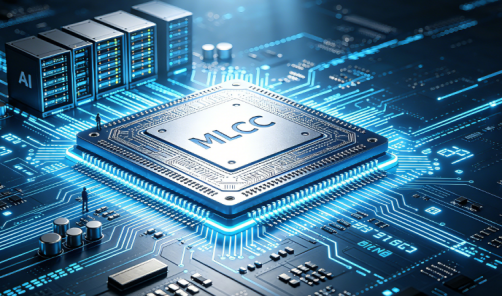
Since 2026, global MLCC supply-demand imbalances have persisted. Leading Japanese and Korean manufacturers, impacted by capacity adjustments and rising costs, now report extended lead times of over 24 weeks for high-end models, with average price increases of 15%–35%. According to TrendForce, MLCC prices entered an upward trend in Q3, shifting market pricing power from buyers to sellers. Driven by dual forces of AI and automotive applications, the MLCC industry has moved beyond traditional consumer electronics cycles into a new phase of structural growth led by high-end demand.
II. Accelerated Domestic Substitution: Leaping from Consumer-Grade to Automotive- and AI-Grade
For years, the global MLCC market has been dominated by Japanese and Korean giants like Murata, Samsung Electro-Mechanics, and TAIYO YUDEN, who collectively hold over 70% of the high-end segment. Domestic Chinese manufacturers were historically confined to low-to-mid-tier consumer-grade products. Recently, however, breakthroughs in technology and capacity expansion by domestic leaders have significantly accelerated substitution efforts—achieving large-scale replacement in mid-to-low-end markets and opening a critical window for high-end breakthroughs.
Leading domestic players such as Fenghua Advanced Technology and CICT have successfully mass-produced automotive-grade MLCCs certified under AEC-Q200 and entered mainstream automotive supply chains. Fenghua’s advanced MLCC facility is now ramping up production, with AI-related orders accounting for 15%–20% of output and products already supplied to NVIDIA’s supply chain. CICT leads in yield rates for high-capacitance and high-voltage products, delivering bulk volumes to new energy vehicle customers. In high-specification segments like 0201 high-capacitance and high-frequency MLCCs, domestic products are steadily closing the performance gap with international benchmarks, gradually filling critical high-end gaps in the domestic market.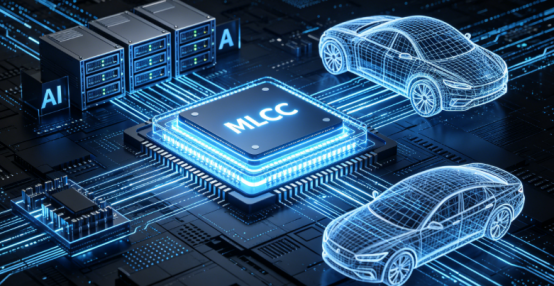
This acceleration in domestic substitution stems not only from technological advances but also from local advantages such as faster response, proximity-based service, and stable delivery timelines. During this current shortage-and-price-hike cycle, domestic suppliers—with their stable capacity and controllable costs—have become the preferred choice for downstream customers seeking supply chain security, steadily gaining market share. Nevertheless, challenges remain: in top-tier segments like AI-server-specific high-capacitance and high-frequency MLCCs, domestic firms still face hurdles related to materials, manufacturing processes, and lengthy certification cycles, necessitating sustained R&D investment and long-term commitment for high-end substitution.
III. Industry Challenges and Trends: Technological Advancement and Supply Chain Restructuring
The MLCC industry currently faces coexisting opportunities and challenges, with technological iteration and supply chain restructuring progressing in parallel. Technologically, miniaturization, high capacitance, low high-frequency losses, and high reliability remain core development directions. Ultra-miniature sizes like 01005 and 008004 are rapidly penetrating the market, while nano-grade ceramic powders and ultra-thin dielectric layer processes have become key competitive focal points. For AI and automotive applications, demand continues to grow for high-reliability products offering high-temperature resistance, electromagnetic interference immunity, and extended operational life—pushing the industry toward higher-value segments.
On the supply chain front, global capacity is consolidating among leading players. Japanese and Korean manufacturers are scaling back mid-to-low-end production to focus on premium segments, creating space for domestic substitution. However, factors such as rising raw material costs, long capacity expansion cycles, and tightening environmental regulations constrain rapid industry scaling. Downstream enterprises now place unprecedented emphasis on supply chain security, making multi-sourcing, domestic substitution, and localized support industry-wide consensus—accelerating the global supply chain toward diversification, regionalization, and self-reliance.
In response to MLCC price hikes and shortages, downstream companies are adopting core strategies: securing stable supply sources, proactively managing inventory, and accelerating validation of domestic alternatives. Partnering with specialized platforms offering full-category availability, guaranteed authenticity, technical support, and BOM matching capabilities can effectively reduce procurement costs and mitigate supply disruption risks—enabling firms to fully capture the benefits of this industry upswing.
IV. ICX: One-Stop MLCC Supply Chain Solution
Amid tightening supply-demand conditions, high-end shortages, and accelerating domestic substitution, enterprises commonly face pain points including fragmented sourcing channels, unstable lead times, inconsistent quality control, and difficulties in alternative component selection. ICX, deeply rooted in the electronic components sector, has built a dedicated one-stop MLCC procurement service to provide reliable support for customers.
The platform integrates mainstream global brands—including Murata, Samsung Electro-Mechanics, Fenghua Advanced Technology, and CICT—offering a complete range of MLCCs across consumer, industrial, automotive, and AI server grades. With extensive spot inventory and a nationwide warehousing network, ICX enables rapid delivery to effectively alleviate lead time pressures. For domestic substitution needs, ICX provides professional component selection comparisons, parameter matching, and alternative recommendations to help customers swiftly complete domestic validation and enhance supply chain autonomy. The platform strictly enforces traceable authenticity protocols, eliminating counterfeit, refurbished, or loose-new components to ensure robust quality assurance for both R&D and mass production.
Through ICX’s one-stop service, enterprises can quickly procure full-model MLCCs without the need for multi-source quotation comparisons—significantly reducing both procurement costs and time investment, ensuring stable production and enabling them to seize opportunities during this industry supercycle.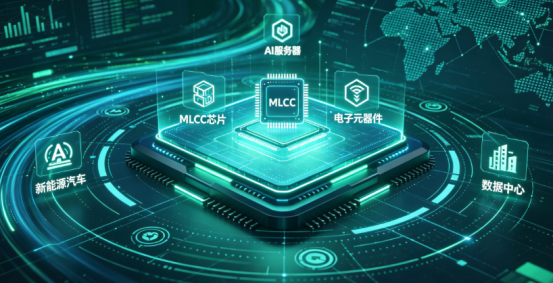
V. Seizing the New Cycle, Co-Building High-Quality Industrial Development
From foundational enablers of the electronics industry to strategic core components in the AI and automotive era, MLCCs are undergoing profound value redefinition and structural realignment. Demand surges, price appreciation, and domestic substitution are converging to propel the industry into a new high-growth phase. Looking ahead, continuous technological advancement and supply chain optimization will empower domestic MLCC manufacturers to achieve greater breakthroughs in premium markets, driving China’s electronics industry chain toward higher levels of sophistication.
For OEMs, stable MLCC supply is the prerequisite for product quality and delivery efficiency. By closely tracking industry trends, optimizing supply chain strategies, accelerating domestic substitution, and partnering with professional service platforms, companies can navigate transformation with resilience and confidence. ICX remains committed to supporting its customers through stable supply, technical expertise, and efficient service—helping them mitigate risks, seize opportunities, and contribute to the safe, efficient, and high-quality development of China’s electronics industry.
trending news
Contact Us