


Sorry, no sales person is available right now to take your call. Pls leave a message and we will reply to you via email as soon as possible.
Home/ Industry News/ From "Chip Shortage" to "Expensive Chips": The Tale of Ice and Fire in the Semiconductor Supply Chain
From "Chip Shortage" to "Expensive Chips": The Tale of Ice and Fire in the Semiconductor Supply Chain
2026-03-19
Recently, the global semiconductor industry has once again stepped into the spotlight, with a series of ripple effects profoundly impacting every link—from raw materials to end products. As a distributor and service provider deeply rooted in the electronic components industry, ICkey closely monitors these market pulses. Today, let’s delve into this "Song of Ice and Fire," driven by cost pressures, demand shifts, and technological competition, and explore its far-reaching implications across the supply chain.
I. The Surge of Price Hikes: Dual Drivers of Cost and Demand
Starting in April, a wave of price increases led by industry leaders has swept through the semiconductor market. First came NXP Semiconductors, the automotive chip giant, followed closely by analog chip powerhouse Texas Instruments (TI). Both announced product price hikes effective April 1. This is not merely a routine price adjustment—it’s a strong signal of profound shifts in the industry’s supply-demand dynamics.
NXP officially attributed its price increase to sustained rises in raw material, energy, and logistics costs—pressures that have exceeded the company’s internal capacity to absorb. To address this challenge, NXP has notified its distribution channels that it will update its price list on March 30 and provide advance notice for affected product lines. Although specific details were not disclosed, industry observers widely speculate that the adjustments will primarily target NXP’s core strengths: automotive-grade MCUs and related analog devices—critical components in today’s intelligent vehicle production. Price fluctuations in these chips will inevitably reverberate throughout the entire automotive supply chain.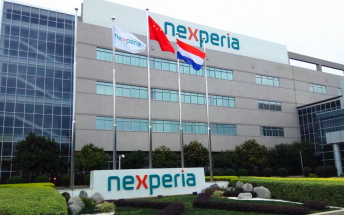
If NXP’s move is a “precision strike,” TI’s price adjustment is more like a “carpet bombing.” This marks TI’s second broad-based price hike in recent months, with increases ranging dramatically from 15% to 85%, affecting nearly all customers and core product lines—including widely used digital isolators and power management ICs. Last year, TI had already raised prices by 10–30% on select industrial and automotive electronics products. This latest round of substantial increases will undoubtedly impose significant cost pressure on its vast customer base.
Analyzing the motivations behind these two giants’ price hikes reveals two clear trends:
Cost pressure transmission along the supply chain: Global inflation and rising energy and logistics costs—exacerbated by geopolitical tensions such as the Middle East conflict—have become unavoidable realities for all manufacturers. Increasing wafer foundry costs and higher assembly and testing fees inevitably translate into higher finished chip prices.
Structural demand imbalances: The explosive growth of AI is consuming computing and storage resources at an unprecedented pace, indirectly squeezing capacity for other chips. Meanwhile, the ongoing trend toward vehicle intelligence and electrification continues to drive strong demand for automotive-grade semiconductors. With conservative wafer capacity expansion and overall low inventory levels, the supply-demand balance has tilted sharply—creating fertile ground for price increases.
This wave of price hikes is not an isolated event; it has already spread across the industry. International players like Analog Devices (ADI) and domestic analog leaders such as SG Micro Corp have also issued price adjustment notices. ICkey observes that TI’s latest price changes have quickly rippled through distribution and spot markets, causing noticeable short-term price volatility in relevant components—posing significant procurement challenges for small and medium-sized manufacturers.
Yet, there’s optimism on the other side of the market. NXP remains bullish on industry growth over the next two years, projecting an annual business growth rate of 14%, particularly in its core automotive and industrial segments—indicating that despite high costs, the market “pie” continues to expand.
II. Market Reshuffling: Infineon’s Steady Defense and Strategic Breakthrough
Beyond the noise of price hikes, another dimension—the competitive landscape—is quietly evolving. According to the latest data, Infineon has retained its position as the global MCU market leader with a 23.2% share. Against a backdrop of a slight 0.3% decline in the overall global MCU market in 2025, Infineon’s share actually rose by 1.8 percentage points—a remarkable achievement.
Infineon’s success is no accident. Even before claiming the top global MCU spot, it had already dominated the critical automotive MCU segment. Its winning formula lies in long-term investment in highly reliable and secure MCU products, coupled with deep technical barriers and strong customer relationships in automotive electronics and industrial control. In August 2025, Infineon completed its acquisition of Marvell’s automotive Ethernet business—a strategic move that significantly enhanced its system-level capabilities in the era of “software-defined vehicles.” By integrating advanced networking technologies, Infineon can now offer automakers more comprehensive, future-ready domain and zonal controller solutions.
For ICkey, Infineon’s steady progress is a positive signal—indicating sustained strong demand for high-quality, stable MCUs. We note that Infineon’s dominance not only solidifies its traditional strongholds but also opens new growth avenues in emerging fields like industrial IoT and humanoid robotics—areas that demand MCU performance, security, and power efficiency comparable to automotive applications, where Infineon excels. Infineon attributes its success to continuous innovation and close collaboration with partners—a philosophy that aligns closely with ICkey’s own approach: empowering customers through expert technical support and reliable supply chain services to navigate industry transitions.
III. The AI Compute Race: In-House Chips and Supply Chain Strategy
While price hikes reflect current realities, future bets are being placed in the fierce competition over AI chips. Social media giant Meta recently unveiled four new AI chips, expanding its in-house Meta Training and Inference Accelerator (MTIA) series. These chips—MTIA 300, 400, 450, and 500—are finely tuned for tasks ranging from basic recommendation models to high-end AI inference.
Meta’s strategy is clear: embrace commercial GPU leaders like NVIDIA and AMD for cutting-edge compute power while steadfastly pursuing in-house development. This “two-pronged” approach allows Meta to optimally meet its massive and diverse AI workload demands while reducing overreliance on any single supplier—enhancing supply chain autonomy and resilience. This introduces a new competitive variable for NVIDIA and AMD and signals a more diversified future for the AI compute market.
IV. The Storage Market’s Ice and Fire: Strike Crisis and Soaring Prices
Another major casualty of surging AI demand is the memory chip market—particularly NAND Flash. The sector is currently experiencing an unprecedented “price surge.” Meanwhile, Samsung, the global memory leader, faces internal turmoil with a looming large-scale strike.
Samsung’s union plans to hold a strike vote in March involving 89,000 members—over 60% of its Korean workforce. If approved, an 18-day general strike could begin in May. The trigger was a breakdown in negotiations over annual bonus calculations. For a semiconductor manufacturer reliant on uninterrupted production, even a short strike poses significant disruption risks. Notably, Samsung is currently tasked with producing NVIDIA’s next-generation HBM4 memory—any production hiccup could delay the delivery of the world’s most advanced AI chips.
Meanwhile, NAND price hikes are spiraling out of control. Reports indicate that after raising NAND flash prices by 100% in Q1, Samsung plans an equally steep increase in Q2—resulting in a staggering cumulative 200% price jump within just six months. Other leaders like SK hynix are following suit with their own adjustments.
The root cause of this NAND surge remains AI. AI servers’ voracious appetite for high-performance storage has dramatically boosted demand for enterprise SSDs. Simultaneously, to meet explosive demand for high-bandwidth memory (HBM) from AI chips, Samsung and SK hynix have redirected some production lines from NAND to more profitable HBM—directly shrinking general-purpose NAND capacity. With surging demand and shrinking supply, the imbalance has reached extremes, making price increases almost inevitable.
Downstream companies, facing memory vendors’ price notices, have little choice but to accept them. ICkey anticipates that these mounting costs will ultimately be passed on to consumers, driving up prices of smartphones, laptops, and servers in 2026. For procurement teams, maintaining supply stability and cost control amid this pricing storm has become an unprecedented challenge.
V. Relentless Innovation: SK hynix’s LPDDR6 Breakthrough and the HBM4 Race
On the technology front, SK hynix has delivered good news. The company announced the successful development and validation of the world’s first 16Gb LPDDR6 DRAM based on its sixth-generation 10nm-class (1α) process. Mass production preparation is scheduled for completion in the first half of the year, with shipments expected in the second half—primarily targeting smartphones and tablets with on-device AI capabilities.
Technically, this new product offers a 33% boost in data processing speed over its predecessor, LPDDR5X, with a base operating speed exceeding 10.7 Gbps. More importantly, by introducing sub-channel architecture and DVFS (Dynamic Voltage and Frequency Scaling) technology, it reduces power consumption by over 20%, intelligently balancing performance and energy use based on application scenarios. This will undoubtedly deliver longer battery life and smoother multitasking for mobile devices—meeting growing global demand for on-device AI performance.
Meanwhile, the race for HBM4—the pinnacle of future AI server performance—is taking shape. According to foreign reports, NVIDIA’s next-generation AI accelerator, Vera Rubin, slated for launch in the second half of the year, will primarily source its HBM4 memory from Samsung Electronics and SK hynix. Both Korean firms have met NVIDIA’s stringent performance and yield requirements, while Micron—the world’s third-largest memory maker—has been excluded from the initial supply chain.
It’s reported that NVIDIA conducted two tiers of quality tests for HBM4, targeting speeds of 10 Gb/s and 11 Gb/s. Samsung has largely passed all tests, while SK hynix is finalizing optimizations. This positions the Korean duo ahead in the next-generation high-bandwidth memory race.
In summary, the semiconductor market is navigating a complex period shaped by intersecting forces: widespread price increases, reshuffled market dynamics, breakneck technological advancement, and fragile supply chains. For OEMs and design houses, this is an era brimming with both opportunities and challenges.
As a bridge between upstream manufacturers and downstream customers, ICkey feels a deep sense of responsibility. We not only track every price adjustment and technology launch from NXP, TI, Infineon, and others, but also understand how events like Samsung’s strike or NAND price spikes could impact your procurement plans.
Transparent Information: We provide timely market insights and professional analysis to help you make informed decisions.
Stable Sourcing: Leveraging our robust global supply network, we help you secure reliable components amid shortages and price surges—minimizing disruption risks.
Technical Enablement: Whether it’s Infineon’s latest MCUs or SK hynix’s advanced memory, we offer expert component selection support and technical consultation.
The semiconductor industry’s “Song of Ice and Fire” continues. ICkey stands ready to partner with you—through professional services and a resilient supply chain—to navigate market turbulence and seize every growth opportunity brought by technological transformation. Visit our platform anytime to check the latest pricing, inventory, and technical updates.
Disclaimer: This article and its illustrations are intended solely for engineers’ reference. For copyright infringement or other violations, please contact the site administrator. (To source more electronic components, visit ICkey.)
trending news
Contact Us