



Sorry, no sales person is available right now to take your call. Pls leave a message and we will reply to you via email as soon as possible.
Home/ News/ Memory chips and passive components enter a "super price hike cycle."
Memory chips and passive components enter a "super price hike cycle."
2026-03-16
Supply-demand imbalance, soaring costs, and tight capacity—these three pressures are compounding, impacting the entire industry chain from upstream wafer fabs to downstream end-product manufacturers.
1. Memory Chips: The AI-Driven "Super Cycle"
Interior of an AI server room showcasing high-performance computing chips and high-speed storage modules, highlighting the essential storage demand driven by computing power scenarios
1.1 Price Increases Reach Historic Highs
Since 2025, the global memory chip market has completely exited its low-price cycle, entering a strong rebound led by AI-driven demand. Prices for DRAM and NAND Flash—the two core categories—have surged dramatically, making them the central drivers of this price rally.
Market data shows that high-frequency, high-capacity models used in servers and premium laptops have seen price hikes exceeding 30%. End-market impacts are even more evident: notebook memory prices have risen 4–6 times in just six months, SSD prices have doubled, with 1TB SSDs now costing over RMB 1,000 and 2TB versions firmly priced above RMB 2,000. Even high-speed camera TF cards (128GB) have climbed to over RMB 200, with only minor price differences across brands.
1.2 Supply-Demand Imbalance Is the Core Driver
This round of memory price increases stems fundamentally from simultaneous supply contraction and demand explosion—a dual imbalance unlikely to ease quickly:
✅ Supply Side: Tight Capacity, Slow Expansion
Global leading wafer foundries are operating at full capacity for advanced nodes, resulting in insufficient supply for high-end memory chips. New capacity additions may take 12–18 months to materialize.
Memory chip manufacturing involves complex processes with stringent yield control requirements, making rapid capacity expansion unfeasible in the short term.
Upstream raw material costs—including silicon wafers and photoresists—continue to rise, further pushing up production costs.
✅ Demand Side: AI Computing Power Ignites Essential Demand
Exploding demand for AI servers has become the largest incremental market for memory chips, with per-server storage capacity requirements multiplying.
Accelerated deployment of 5G/6G infrastructure, autonomous driving systems, data centers, and energy storage solutions continues to divert memory capacity.
Upgrades in consumer electronics and digital devices steadily increase demand for high-capacity, high-speed storage.
2. Resistors and Capacitors: The "Price Surge" in Passive Components
Close-up of automated resistor and capacitor production lines, highlighting precision manufacturing processes and component testing procedures to underscore the technical barriers in passive component fabrication.
2.1 Industry-Wide Price Hikes Exceed Expectations
Entering 2026, the passive components sector continues to experience escalating price increases. Leading global and domestic manufacturers—including Yageo, Walsin, Panasonic, Fenghua Advanced Technology, and Sunlord Electronics—have successively issued official price adjustment notices, driving prices upward across all product categories:
MLCC (Multilayer Ceramic Capacitors): Across-the-board increases of 10%–15%, with automotive-grade and industrial-grade models seeing even higher hikes.
Chip Resistors: General-purpose models up ~10%; special-specification and high-precision variants rising as much as 20%.
Tantalum Capacitors: International players like Panasonic have implemented the most aggressive adjustments, with some models surging over 30%.
2.2 Soaring Costs Force Industry-Wide Price Adjustments
Though often overlooked, passive components serve as the “basic building blocks” of electronic devices. This pricing wave is primarily driven by dual cost pressures from raw materials and manufacturing:
Raw Material Costs Skyrocket
Precious metal prices spiral out of control: Silver prices have surged 201% year-over-year, becoming the single largest cost pressure for passive components.
Base metals rise: Copper, tin, nickel, and other industrial metals continue climbing, directly increasing substrate costs.
Supporting materials tighten: Critical inputs like fiberglass cloth and ceramic powders face supply constraints, pushing their prices higher in tandem.
2.3 Manufacturing Costs Keep Rising
Energy costs—including industrial electricity and natural gas—have increased, intensifying operational pressures on production lines.
Labor expenses and R&D investments in manufacturing continue to grow steadily.
Global logistics, customs clearance, and warehousing costs have risen significantly.
3. In-Depth Analysis of Supply Chain Impact
The surge in electronic component prices is not an isolated fluctuation but a ripple effect transmitted across the entire chain—from upstream to midstream to downstream—creating a stark divergence in outcomes among different players.
3.1 Upstream Players: Direct Beneficiaries, Profits Soar
Wafer Foundries: Operating at peak utilization with fully booked orders, significantly enhancing pricing power.
Material Suppliers: Strong demand for silicon wafers, precious metals, and chemical materials sustains robust profitability.
Equipment Makers: Semiconductor manufacturing and inspection equipment sales rise amid industry-wide capacity expansion.
3.2 Midstream Players: Caught in the Squeeze, Struggling to Balance
Memory Chip Makers: Exiting the era of cutthroat price competition, enjoying substantially restored margins—but still needing to balance capacity against demand.
Passive Component Makers: Urgently passing cost pressures downstream, carefully timing price adjustments to balance market dynamics and customer relationships.
Distributors: Facing heightened inventory management challenges and increased procurement risks amid volatile pricing.
3.3 Downstream End-Market Players: Bearing Cost Burdens, Margins Compressed
AI Server Makers: Hit hardest by cost pressures due to high memory content, leading to significant increases in total system cost.
Smartphone/Laptop Brands: Rising BOM costs constrain pricing flexibility and squeeze profit margins.
Automotive Electronics Makers: Grappling with dual challenges of shortages and price hikes for automotive-grade components.
Consumer Electronics Brands: Low-end product profitability further eroded, accelerating industry consolidation.
4. Future Outlook
4.1 Short-Term Trend: Price Increases Will Persist
In the near term, the component price rally shows no signs of reversal, underpinned by unchanged fundamentals:
AI computing demand continues to explode, leaving persistent gaps in high-end memory and automotive-grade passive components.
Advanced capacity takes time to build; supply-demand gaps are unlikely to close within 1–2 years.
Precious and base metal cost pressures remain, providing strong support for sustained high pricing.
4.2 Medium- to Long-Term Impact: Industry Restructuring Underway
Accelerated Technological Iteration: Higher performance, smaller form factors, and lower power consumption are becoming mainstream, reinforcing the shift toward premium products.
Faster Domestic Substitution: Heightened supply chain security awareness creates breakthrough opportunities for high-quality Chinese component makers.
Intensified Leadership Effect: Industry leaders with technological edge, scale, and capacity advantages will further expand market share.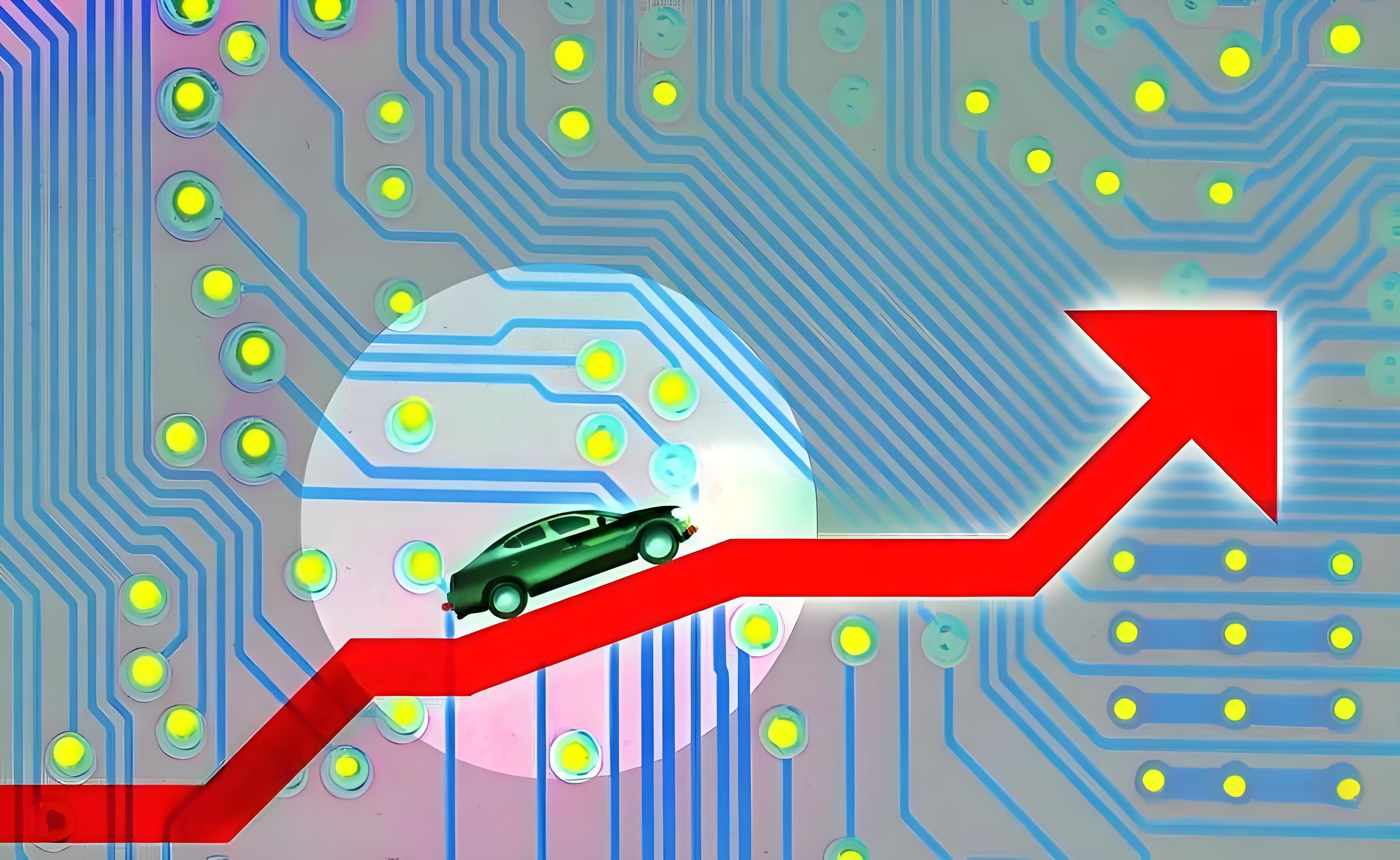
5. Strategic Recommendations
Facing this AI-driven pricing cycle, stakeholders must adopt targeted strategies to mitigate risks and seize opportunities.
5.1 For Manufacturers: Stabilize Supply Chains, Optimize Product Mix
Enhance inventory management by establishing safety stock mechanisms to hedge against short-term price volatility.
Strengthen partnerships with key suppliers through long-term supply agreements to secure stable sourcing.
Accelerate product portfolio upgrades toward high-value, technologically advanced offerings to offset cost pressures.
5.2 For Buyers: Diversify Channels, Control Costs Rigorously
Diversify procurement channels to avoid over-reliance on single suppliers and reduce supply disruption risks.
Lock in purchase prices early via long-term pricing agreements with suppliers to cushion against price shocks.
Optimize product design by selecting cost-effective components to control costs at the source.
5.3 For Investors: Invest Rationally, Focus on Leaders
Prioritize industry leaders with technological superiority and strong economies of scale—they exhibit greater resilience through cycles.
Capitalize on the domestic substitution trend by investing in Chinese component firms with core technologies.
Maintain rationality amid cyclical swings; the electronics sector is inherently cyclical—avoid speculative overvaluation.
Summary:
This wave of electronic component price increases is both an inevitable outcome of surging AI-era computing demand and a pivotal catalyst for supply chain restructuring. While short-term cost pressures pose challenges, the medium- to long-term opportunities in technological upgrading and domestic substitution are unprecedented. ICDeal will continue delivering the latest market insights, in-depth analysis, and procurement guidance. Whether you’re a manufacturer, buyer, or investor, only by maintaining strategic discipline—fortifying your position through supply chain optimization, technological innovation, and cost control—can you navigate cyclical volatility and capture the dividends of industrial transformation.
Disclaimer: This article and its accompanying image are intended solely for engineers’ educational use. For any copyright infringement or other violations, please contact the site administrator. (To source more components, visit ICDeal.)
trending news
Contact Us